Karen Price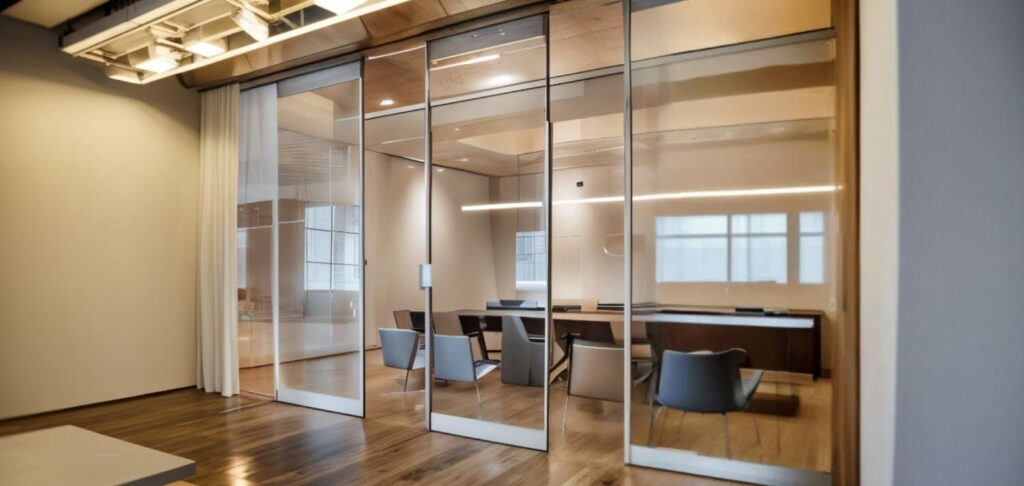
PVB glass partitions or PVB sliding glass office partitions are known for providing a silent atmosphere, although having both of them comes with the question of which one has better sound-insulating characteristics. Together with aesthetic appeal in modern workplaces, privacy is of utmost importance.
They also include noise-canceling properties and make conversation inaudible due to soundproofing layovers; hence, glass sliding partitions are widely trusted within offices.
Understanding PVB Sound-Proofed Glass
How the individual components of PVB soundproof office glass partitions are integrated into each other gives sound-blocking capabilities. In offices, private rooms like clinics, meeting rooms, and boardrooms, partitions need to be movable, so fixed partitions might not give enough protection against noise leakage.
Acoustic performance using Fixed PVB Glass Partitions
Generally, fixed partitions are installed into a frame structure or mounted securely into a wall. Also, they are installed with gaskets made of rubber or acoustic silicone. Sealing it in that manner provides an airtight performance, which in turn provides better acoustics.
With that strong of an installation, sound proofing with partitions will most likely receive STC ratings from 35 to 45, provided the glass within is of suitable thickness.
Advantages of established PVB partitions:
- Superior sound isolation on account of fewer gaps and lasting seals
- Ideal for private offices, intersection rooms, and executive areas
- Minimal maintenance, as no machine-like parts are involved
- Compatible accompanying additional soundproofing elements like blinds or subordinate glazing
In short, fixed PVB glass partitions are the preferred choice when maximum sound control is the priority.
Acoustic Performance of Sliding PVB Glass Partitions
Sliding partitions, in another way, offer greater dimensional flexibility and modern principles of art. They are perfect for dynamic places where rooms need to be adapted fast. However, sliding means introducing a small air break around the door edges and tracks, which can compromise sound insulation.
Even with PVB-laminated glass, sliding arrangements typically achieve lower STC ratings, customarily ranging from 30 to 38, depending on the quality of seals and hardware used.
Advantages of sliding PVB partitions:
- Space-conditional and flexible, especially in compact office layouts
- Offer a sleek, essential appearance
- Can be improved with soft-close plans and acoustic seals to enhance sound control
- Best suited for collaboration zones, open-plan places, and huddle rooms
While not as acoustically robust as established panels, high-end sliding structures with joined acoustic seals can still provide good sound performance.
Which One Should You Choose?
Your choice depends on function over form:
Choose established PVB glass partitions if:
- Privacy and sound seclusion are critical
- The space will not demand frequent layout changes
- You’re crafty executive offices, HR departments, or secret meeting districts
Choose PVB sliding glass partitions if:
- You plan out flexibility and scope-saving design
- Acoustic performance is the main, but not the top priority
- You’re plotting collaborative zones or multi-working rooms
Conclusion
Both PVB sliding and fixed glass partitions bring acoustical benefits to modern workspaces, but each serves different needs. Fixed glass excels in roar isolation, while sliding glass offers flexibility, accompanied by moderate sound control.
By assessing the specific necessities of your office blueprint, you can choose the right solution that balances style, functionality, and acoustic depiction.